



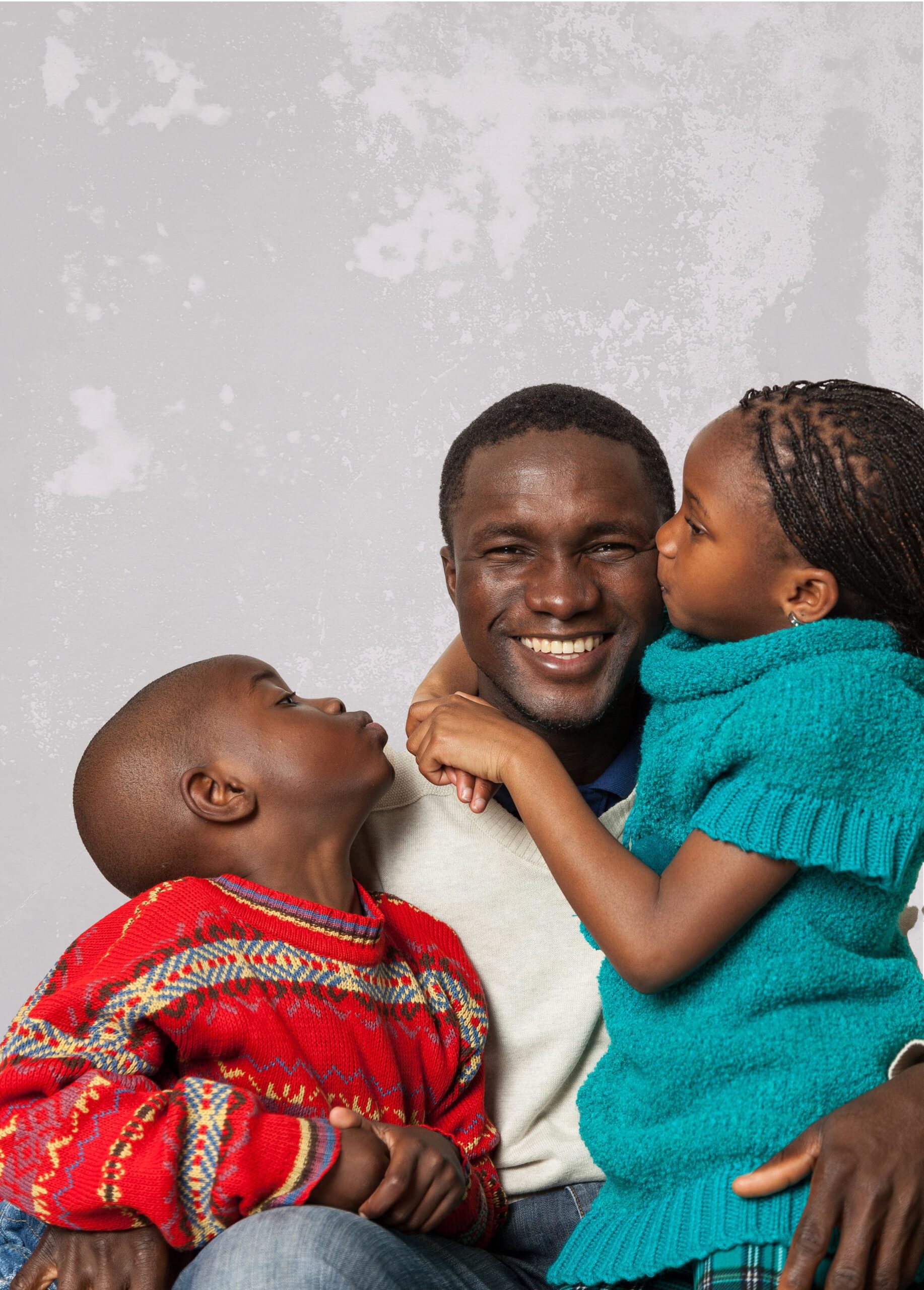
The Heartlines Fathers Matter campaign highlights how positive fatherhood and male role models can help prevent violence before it starts
The glass shattered first. Then hands pulled the door open. Then fists. Then gunshots. Certain details have stayed with Themba Dlamini from the hijacking that nearly took his life. One of these details is how young the men were.
“Young enough to be my classmates. Young enough to still be someone’s sons,” he says. “And the question that has stayed with me ever since is: where were their fathers?”
Dlamini is a husband, father of four, pastor, chartered accountant and author of Village Boy: A Memoir of Fatherlessness. He believes this question – “Where were their fathers?” – sits at the heart of the Heartlines’ Fathers Matter programme, which is calling for a broader national conversation about the role of fathers and father figures in shaping safer, healthier communities.
Violence prevention begins in childhood
Research from the Fathers Matter report suggests that violence does not begin with a weapon – it develops much earlier, in the everyday emotional lives of children. Pathways to violence often take shape long before physical acts occur, emerging in how children experience and process anger, shame and conflict.
“Violence can look sudden, like someone snapped,” says Dlamini. “But it usually grows quietly – in anger that is never named, in shame that is never softened, in boys who were never shown what to do with their strength.”
The report notes that children often mirror the behaviours they associate with manhood, including substance abuse, aggression, bullying and violence, particularly in school environments.
In South Africa, responses to violence tend to focus on enforcement and crisis intervention. Heartlines argues that prevention begins much earlier, and that positive fatherhood has a role to play in breaking cycles of harm.
The role of fathers
The absence of father figures may increase children’s vulnerability to violence, both as victims and, in some cases, as perpetrators. This aligns with existing research linking father absence in South Africa to higher levels of gender-based violence.
Children who do not have a positively present father are negatively affected in various ways, from feelings of abandonment and low self-esteem to being more likely to engage in risky behaviours, such as substance abuse or gangsterism.
Fathers and father figures play a critical role in children’s early formation, Heartlines says. Children learn not only how to express strength, but also when to stop, how to manage anger, and how to resolve conflict without harm. These lessons are not taught in theory but modelled in everyday interactions.
“When the father is not there, children become resentful, they carry anger,” said one of the children interviewed for the formative Heartlines research.
“Our fathers should make us feel safe around them…some of us are afraid of our fathers, they are always shouting and beating us up,” said another.
“Men do not wake up one day and decide to be violent. They are formed,” says Dlamini. “And part of that formation is whether there was someone who helped them understand both their strength and their limits.”
Importantly, the Fathers Matters campaign emphasises that this is not only a conversation for men. Mothers, caregivers and broader communities all play a role in shaping the environments in which children grow up.
“Women’s voices matter in this conversation,” says Zamabongo Mojalefa, project director at Heartlines. “The way conflict, anger and relationships are handled in the home shapes what children come to see as normal. Supporting positive father involvement or helping identify other safe male role models where needed, can make a meaningful difference in a child’s life.”
The bigger picture
Heartlines acknowledges the complex realities behind father absence in South Africa. Historical and socio-economic factors, including migrant labour, poverty and unemployment, have contributed to patterns of separation within families. “This is not about blame,” says Dlamini. “It is about invitation. A child does not need a perfect father. They need presence. They need someone who stays.”
The Fathers Matter Children’s research shows that presence does not have to come only from biological fathers. Uncles, coaches, teachers and other trusted men can play a powerful role in a child’s development, particularly where a father is absent.
Finding support
Through the Fathers Matter programme, Heartlines provides practical resources, stories and support to help men, families and communities build stronger relationships with children. This includes the Fathers Matter Coach WhatsApp platform, workshops, and a range of accessible tools designed to support positive fatherhood and mentorship.
“We do not need fewer men,” says Dlamini. “We need more men who stay.”