



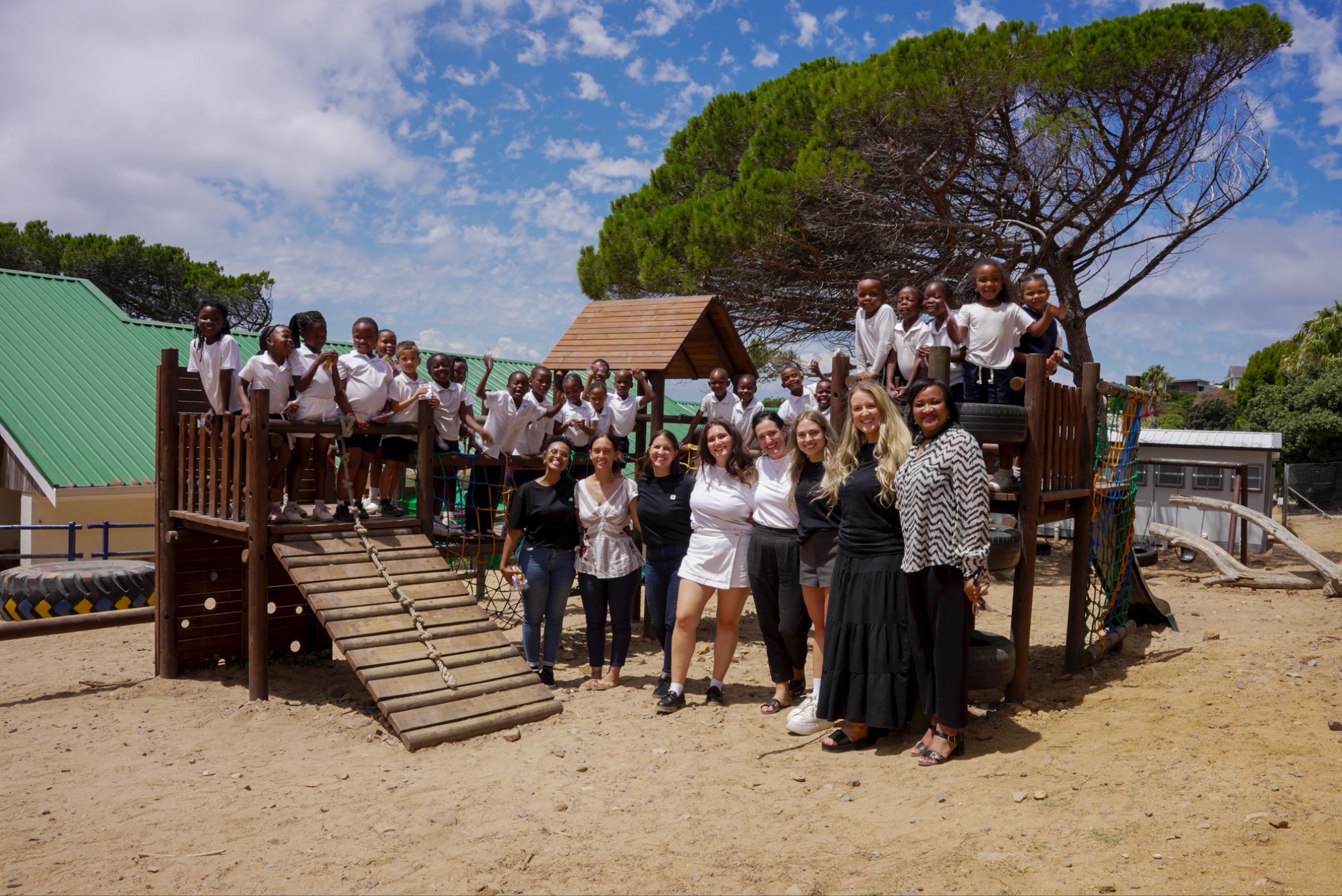
There are countless schoolyards in South Africa where break time means pacing concrete. No shade, no structures, just noise bouncing off walls with the minutes ticking down until the bell pulls kids back inside. At Simon’s Town School, this was the case for its younger learners: energy with nowhere to go and imagination with nothing to climb.
Thank you for reading this post, don't forget to subscribe!This week, that changed as The Lab handed over a newly built playground to Simon’s Town School, a project rooted in its ongoing CSI partnership with the Peninsula School Feeding Association (PSFA), which supports vulnerable schools across the Western Cape. For over a decade, The Lab has partnered with PSFA to support school nutrition programmes and infrastructure upgrades. To date, the brand has contributed toward feeding initiatives, sponsored community fundraising events, invested in kitchen upgrades, and continues to help provide 412 meals to children across the region each day.
The playground revamp at Simon’s Town School extends that commitment beyond nutrition. Children need nourishment, but they also need movement and imagination. Until now, Simon’s Town School’s younger learners had limited play infrastructure. “Play shouldn’t be a privilege. It should be part of every child’s school day,” says Lucrecia Harrison, Principal at Simon’s Town School. “For these learners, having a dedicated space to climb, explore, and test themselves safely restores something important. It tells them their experience here matters.”

Children need space to move, and South African schools desperately need that space. Across the country, public health researchers have been warning about declining physical activity among children, and the pattern is sharper in under-resourced communities where sport and recreational infrastructure are limited.
Unstructured play has been shown to support executive functioning, emotional regulation, and social negotiation skills. Children who climb, balance, argue over whose turn it is next, and invent games on the fly are building conflict resolution abilities that no worksheet can teach. When children have a safe outlet for energy, teachers report fewer disruptions and stronger peer relationships. The playground is preventative care for bodies, moods, and conflict. Yet, it’s often the first thing cut from budgets.
Infrastructure is never neutral. It either invites behaviour or restricts it. For many children, the schoolyard is the safest open space they will encounter all day. By installing a permanent play structure, The Lab has helped create a centre of gravity in Simon’s Town School where energy gathers. It’s where younger learners can build confidence rung by rung, and older learners steady a ladder for someone behind them. These kinds of daily interactions shape how children understand cooperation, belonging, autonomy, and themselves.

For The Lab, a brand built on the philosophy of “clean, care, protect”, the initiative extends the culture of care beyond product and into place. Community partnerships like this are often the difference between a school that survives and one that grows. Public schools in South Africa operate inside tight margins, so when local businesses step in, it creates shared stakes. The return shows up years from now in young people who move through the world with more confidence, and in the communities they go on to shape.
When the first week’s excitement wears off, the playground will stop feeling new. The rules will settle into place, loose queues will form naturally, and the rush will soften into routine. The playground will simply feel normal to the learners of Simon’s Town School. Exactly as it should.