



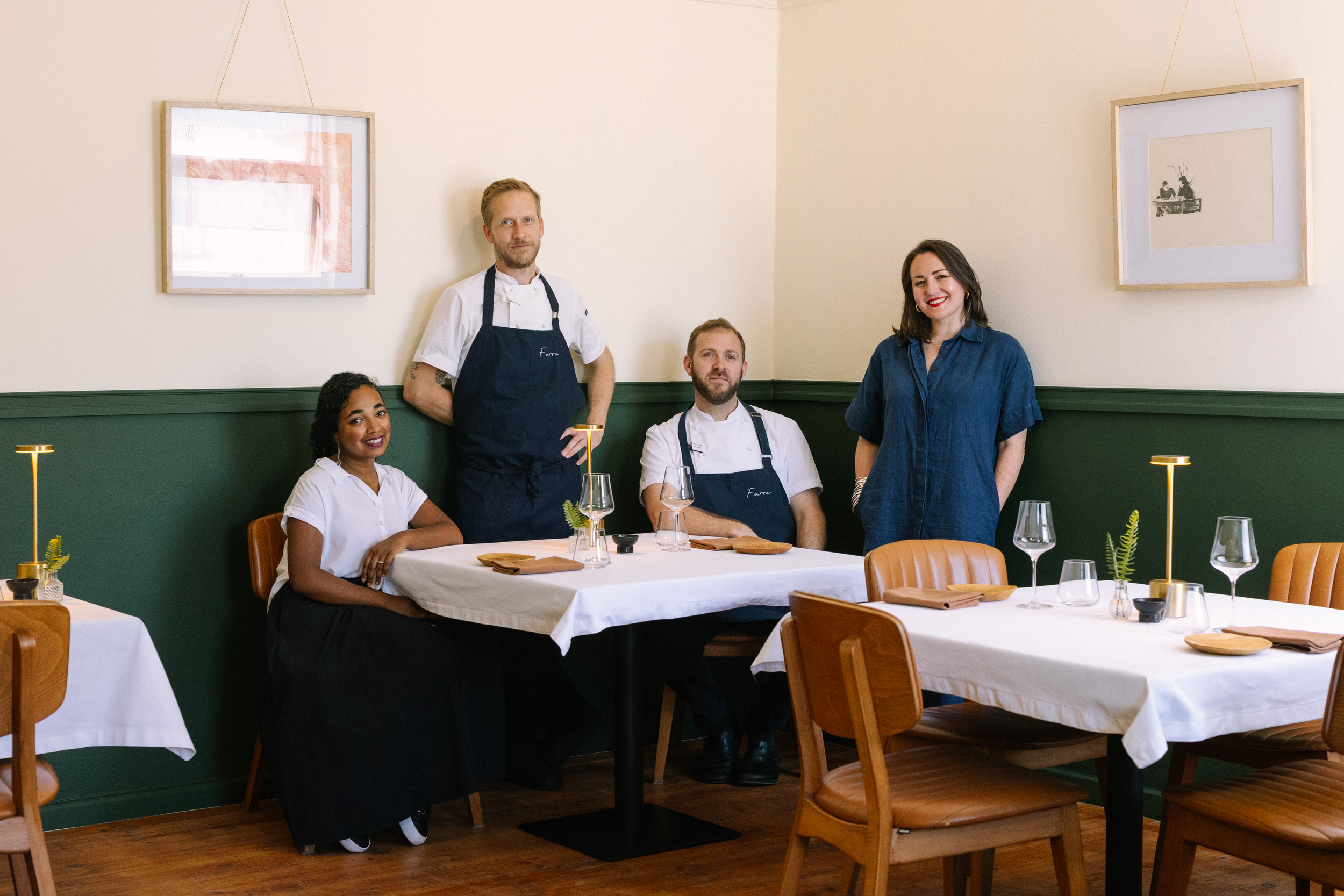
Following the reveal of the Reviewers’ Choice Awards, presented by American Express,
Thank you for reading this post, don't forget to subscribe!we go behind the scenes with some of South Africa’s favourite restaurants,
from local favourites to fine-dining heavyweights.
It’s no secret that South Africa’s restaurant scene is booming right now, but trace your favourite dishes back to the kitchen, and you’ll notice something even more impressive than the food on your plate. From beef reared in the field beyond the restaurant to wine lists that make space for a small producer down the road and even chefs sending diners to one another’s tables, there’s a delicate ecosystem that champions hyper-locality, and diners are taking notice.
The restaurants recognised in the Dineplan Reviewers’ Choice Awards, presented by American Express (operated in South Africa by its licensee Nedbank), are wildly different in scale and philosophy. There are internationally recognised fine-dining institutions and tiny neighbourhood spots with 24 seats; dining rooms built around theatre and others where the main attraction is a cow grazing outside the window.
What makes a restaurant exceptional goes far beyond the food. From the quality of ingredients and service to the dedication of its teams, creating a memorable dining experience requires attention to detail and consistency.
We spoke to several restaurants featured in the Top 100 to explore what makes their experiences unique and how they have built lasting success.
LA COLOMBE: THE ART OF TIMING AND THEATRICS IN FINE-DINING
Good ingredients and well-crafted dishes alone don’t make a great restaurant.
Hospitality is partly a swan-like exercise in making actions on the surface feel graceful and effortless whilst the furious paddling, or heavy lifting, takes place out of sight. At the upper end of South African dining, restaurants such as La Colombe have turned this art into something approaching finely tuned choreography. Executive Chef James Gaag has described La Colombe’s philosophy as “Food is our Theatre” – an apt way to capture a form of dining where food, service, timing, storytelling and surprise move as one.
That sense of theatre is woven into the smallest details. There are the now-iconic La Colombe-branded tuna tins; the atmospheric dishes that arrive in clouds of dry ice; even the crockery becomes part of the performance. “The food, service, crockery, wine and theatre all need to work together,” says Head Chef Scot Kirton. “There’s a huge amount of preparation behind it, but for the guest it should feel effortless, relaxed and fun.”
Since opening in 1996, La Colombe has witnessed a considerable shift in the conventions of fine dining, moving towards something playful and experiential. For Kirton, the restaurant’s longevity has as much to do with the creativity coming out of the kitchen as it does with the people delivering the experience. Kirton is particularly proud of the team and the young students developing into accomplished chefs producing dishes that diners remember for years to come.
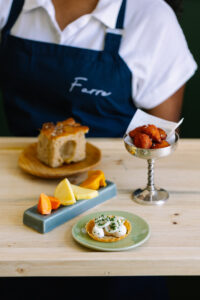
FARRO: A RESTAURANT BUILT ON RELATIONSHIPS
After moving back from the UK and starting a commercial bakery in Joburg, Eloise and Alex Windebank opened Farro – which hopped through multiple locations across the city, eventually becoming a pop-up before relocating to Cape Town and operating through residencies. In 2025, it settled into its permanent home – a Victorian conversion in Gardens.
Yet something interesting happened each time Farro moved: its diners moved with it.
It’s easy to discuss hospitality in terms of menus, interiors and concepts because these are the most visible elements. In reality, restaurants are about human connection. They rely on a network of relationships, stretching from the kitchen porter to the regular at table 6. At Farro this extends from their producers – “I scoured Cape Town for a honey supplier and eventually found a retired financier with beehives at the foot of Table Mountain,” says Eloise – to the precise number of dishes they make each day.
“We have 24 seats, and we don’t take walk-ins, so we make enough fresh pasta for 24 people daily,” says Eloise. “We’re genuinely so happy to meet each guest who walks through this door. It’s a very personal interaction – we’re not the kind of restaurant where you walk in, get fed and leave.”
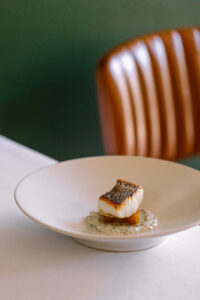
TTK FLEDGELINGS: BUILDING MORE THAN A RESTAURANT
At TTK Fledgelings, the people behind the plates are as important as the food itself. Established by Luke Dale Roberts to give young people without access to formal culinary education a foot in the door, the restaurant operates on a model of paid, on-the-job training, with mentorship extending from the kitchen to front of house. Under Head Chef Nathan Clarke’s direction with Dale Roberts’ guidance, the menu combines South African produce with international techniques and influences, and has become a firm favourite with locals and visitors alike. Even the in-house preparation of stocks, pickles and fresh pasta gives the team practical skills that they can carry into the future. “Hospitality depends on people making good decisions throughout a service,” says Steve Hacker, Operations Director of the Luke Dale Roberts Group. From waiters who can confidently guide diners through service, to cooks who instinctively know when a dish needs adjusting, investing in individuals strengthens the restaurant as a whole.
Perhaps the clearest example is Clarke himself, who began washing dishes at The Test Kitchen before working his way up to lead the TTK Fledgelings kitchen. His journey has come full circle, with the former trainee now responsible for nurturing a new generation of talent. As Hacker explains, “New recruits can see someone leading the kitchen who started washing dishes. That makes the possibility of building a career more tangible.”
There is no secret formula for a restaurant that stands the test of time, and this is what makes each success story all the more intriguing.
The common ground lies somewhere between conviction and care. It is knowing what kind of restaurant you are and resisting the temptation to become anything else. It’s an understanding of relationships as much as geography, and it’s about consistency – the sometimes-unglamorous business of doing it all again tomorrow.
“There are so many ways to measure a restaurant’s success,” says Paige Errera, Head of Marketing at Dineplan. “But few are as meaningful as the loyalty of its diners. When we look at the restaurants diners return to year after year, it’s rarely one thing that sets them apart. The Reviewers’ Choice Awards, presented by American Express, give us the opportunity to recognise all the work that goes into making these experiences so memorable.”
What makes South Africa’s restaurant scene so exciting right now? The industry is becoming more confident in the value of what already exists – its extraordinary produce and terroirs; its growers, winemakers, waiters, entrepreneurs and communities. The most memorable restaurants do so much more than offer up dishes that delight. They create a small ecosystem around themselves and invite us in for a few hours. What starts as logistics becomes a dance between chef, waiter, plate and table – a beautiful alchemy that ultimately keeps diners coming back for more.
Additional information
To discover the restaurants featured in the Dineplan Reviewers’ Choice Awards Top 100, presented by American Express, and explore the full list of award recipients, visit: www.dineplan.com/awards/reviewers-choice-2026-top-100
For more information about American Express Cards available in South Africa, visit: www.americanexpress.com/southafrica
Restaurants and other businesses interested in learning more about accepting American Express can find additional information at: www.americanexpress.co.za/merchant
