

If your social media feed has become a revolving door of longevity hacks promising more energy, sharper focus, and a longer life, you’re not alone. Every scroll seems to bring another self-proclaimed health guru championing the next breakthrough, whether it’s ice baths, peptide injections, NAD+ drips, red light therapy, mouth taping, or continuous glucose monitors for people who don’t even have diabetes. The message is clear: if you’re not optimising every aspect of your biology, you’re falling behind.
Thank you for reading this post, don't forget to subscribe!As the wellness industry explodes and the pursuit of longevity becomes increasingly mainstream, so too has the confusion. With an endless stream of health advice competing for attention, consumers are left wondering which interventions are backed by science and which are simply the latest social media obsession.
The global wellness industry is now worth an estimated US$2 trillion, and the pursuit of living longer has become one of its fastest-growing sectors, but alongside legitimate scientific advances has come an avalanche of misinformation, miracle claims and expensive trends that often leave consumers wondering what’s fact and what’s fiction.
“As longevity medicine has entered mainstream conversation, so has confusion,” says Dr Siddharth Govender, Medical Director at NADClinic. “People are exposed to hundreds of conflicting opinions online, and the challenge is that good medicine rarely comes in absolutes.”
“Context matters,” he notes. “What may be appropriate for one patient may be unnecessary or even inappropriate for another.”
So, in a world where health advice is increasingly shaped by algorithms rather than clinicians, what should consumers actually believe? Dr Govender separates fact from fiction on some of today’s biggest longevity trends.

Myth 1: Biohacking is just another wellness fad
Reality: Biohacking isn’t a treatment; it’s a broad term.
Originally, biohacking simply described using science, technology and data to optimise health. That could mean anything from improving sleep and nutrition to tracking exercise performance or monitoring blood glucose levels.
“The problem is that biohacking has become a catch-all phrase,” explains Dr Govender. “Some practices are backed by decades of research, while others have very little scientific evidence, and consumers shouldn’t dismiss everything under the biohacking umbrella, but neither should they assume every trending intervention is effective.”
At its best, modern longevity medicine isn’t about hacks at all but rather it’s about prevention, early intervention and understanding how the body ages.
Myth 2: NAD+ is a miracle anti-ageing treatment
Reality: NAD+ plays an important biological role, but it’s not a magic bullet.
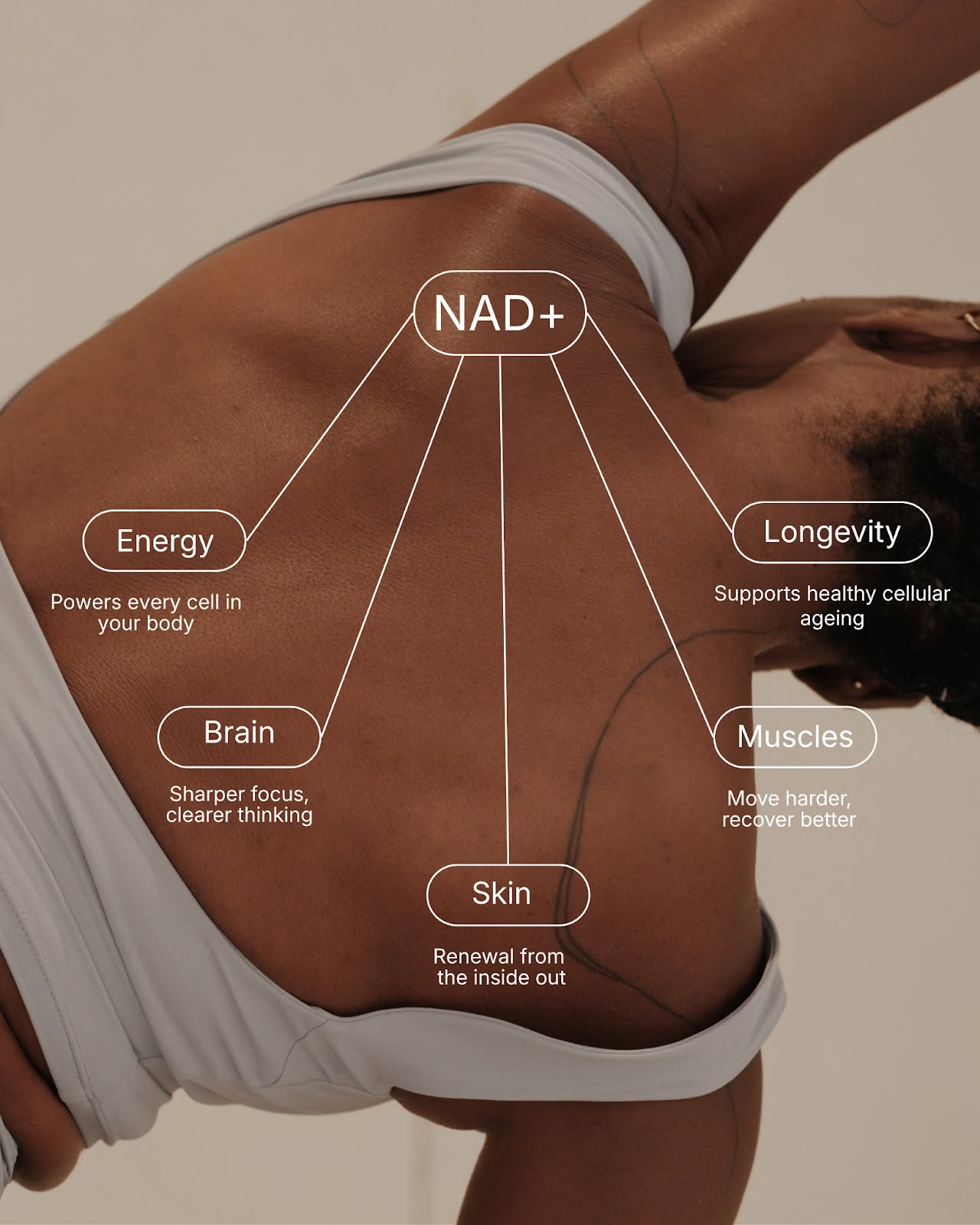
NAD+ (nicotinamide adenine dinucleotide) is a molecule found naturally in every cell of the body and is essential for cellular energy production, DNA repair and healthy mitochondrial function. Levels decline naturally with age, which has led researchers to investigate its role in healthy ageing.
“There’s genuine scientific interest in NAD+ because it’s fundamental to how our cells function,” says Dr Govender. “However, it’s important to understand what the evidence currently tells us and what it doesn’t.”
“NAD+ isn’t a cure for ageing, nor does it replace the fundamentals of good health,” he adds. “NAD+ should be viewed as one possible component of a broader longevity strategy rather than a standalone solution.”
Myth 3: Peptides are the cornerstone of every longevity protocol
Reality: Peptides have an important role in longevity medicine, but they’re not a one-size-fits-all solution.
“Peptides are highly targeted therapies designed to influence specific biological processes, whether that’s recovery, metabolic function or tissue repair,” explains Dr Govender. “They can be incredibly effective when used appropriately, but they’re just one piece of the longevity puzzle.”
By contrast, NAD+ supports the body’s fundamental cellular processes, including energy production, mitochondrial function and DNA repair.
“Rather than asking whether NAD+ is better than peptides, the real question is where each intervention fits within an individual’s health journey,” he says. “For many patients, optimising cellular health provides the foundation upon which more targeted therapies, such as peptides, can deliver their greatest benefit.”
Myth 4: If it’s trending online, it must work
Reality: Popularity is not scientific evidence.
Social media has accelerated the speed at which wellness trends spread, often long before robust clinical evidence exists.
“Consumers are becoming far more informed,” says Dr Govender. “They’re asking about clinical trials, safety profiles and long-term outcomes rather than simply following what’s trending on TikTok and that’s a positive shift.”
Recent regulatory action by South Africa’s health authorities against unlawful GLP-1 and GIP products has also highlighted the importance of seeking treatment from qualified medical professionals rather than unverified online sources.
Myth 5: Longevity medicine is about living forever
Reality: It’s about living better for longer.
Perhaps the biggest misconception is that longevity medicine is an attempt to stop ageing altogether.
In reality, clinicians say the goal is far more practical.
“It’s not about adding decades to life at any cost,” says Dr Govender. “It’s about improving healthspan, which is the number of years people remain healthy, active and independent.”
That means focusing on preventing chronic disease, preserving muscle mass, maintaining cognitive function, improving metabolic health and supporting recovery long before illness develops.
The future belongs to evidence, not hype
As interest in longevity continues to grow, consumers are entering a more discerning era.
“Rather than chasing the latest miracle intervention, people are increasingly seeking personalised care, measurable outcomes and treatments supported by credible science,” explains Dr Govender. “The most powerful longevity intervention isn’t a single drip, injection or supplement but rather it’s a medically guided strategy built around the individual.”
“The future of longevity medicine isn’t about finding the next miracle; it’s about making better decisions, earlier, using the best evidence we have,” he concludes. “In an industry often fuelled by headlines and hashtags, that may be the most valuable health advice of all.”