




One in three women reports burnout at work; experts say the future of high performance isn’t pushing harder, it’s recovering better.
Women are succeeding at work, but they’re paying a hidden biological price. As Women’s Month shines a spotlight on the progress women have made in the workplace, research suggests that success is coming at the expense of their health.
Gallup’s latest State of the Global Workplace research found that 31 percent of women report experiencing burnout ‘very often’ or ‘always’, compared with 23% of men.
Those findings are reinforced by a global survey of over 30,000 employees conducted by the McKinsey Health Institute in collaboration with the World Economic Forum in 2025, which found that women consistently reported poorer overall health outcomes at work than men. Closer to home, the South African Depression and Anxiety Group (SADAG) estimates that as many as one in three South African employees is affected by burnout.
“Burnout is not just a workplace issue, but a longevity issue driven by chronic stress, inadequate recovery and sustained physiological strain,” according to Dr Siddharth Govender, Medical Director at NADClinic. “This research reflects a growing trend among high-performing women.”
“We’re increasingly seeing women who are functioning exceptionally well on paper, yet they’re physiologically depleted coming into the NADClinic,” he says. “They’re leading businesses, raising families and managing demanding careers, but many are experiencing persistent fatigue, brain fog, poor recovery and disrupted sleep.”
These symptoms, he notes, have become so normalised that women often assume they’re simply part of modern life. “For years, hustle culture has rewarded, and while performance can be sustained for a time, the human body was never designed for continuous output.”
The problem extends beyond the pressure women place on themselves. Dr Govender believes women’s health has too often been approached through broad symptoms or isolated life stages, rather than by looking at the individual and the interplay between her hormones, metabolic health, sleep, stress, nutrition, energy and lifestyle.
“Women’s health remains significantly under-addressed in healthcare, and symptoms such as persistent fatigue, poor sleep, brain fog or weight changes can too easily be normalised or dismissed as simply part of being a busy woman,” he says. “We need to become much better at listening to what women are telling us and investigating why they are feeling the way they do.”
“At NADClinic, our approach is to look at the individual as an individual. Two women can present with very similar symptoms but have very different underlying drivers,” he adds. “Personalised healthcare means understanding her biology, lifestyle, health history and goals before deciding what support or intervention may be appropriate.”
“The nervous system is built to move between periods of stress and recovery,” explains Dr Govender. “When recovery disappears, the body eventually begins to signal that something isn’t working.”
This fatigue, he says, isn’t a weakness to overcome; rather, it should be seen as biological feedback. “This distinction is becoming increasingly important as burnout is recognised not only as a workplace issue but as a broader health concern,” he adds. “Chronic stress has been associated with poorer sleep, impaired cognitive function, hormonal disruption, increased inflammation and reduced resilience; these factors can influence both quality of life and long-term health.”
“One of the biggest misconceptions is confusing performance with stimulation,” he says. “Caffeine, adrenaline and sheer determination can temporarily increase alertness, but they don’t restore the body’s ability to produce energy.”
“Sustainable performance comes from supporting the biological systems responsible for recovery, not simply overriding fatigue,” he explains. “This is where advances in longevity medicine are becoming central to maintaining performance over the long term rather than simply treating illness once it occurs.”

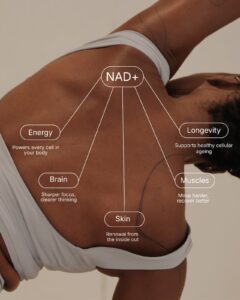
Dr Govender points out that one area attracting growing scientific interest is NAD+ (nicotinamide adenine dinucleotide), a naturally occurring coenzyme present in every cell of the body. “NAD+ is essential for cellular energy production, mitochondrial function and DNA repair,” he adds. “These NAD+ levels naturally decline with age and may also be influenced by chronic stress and metabolic health.”
“NAD+ therapy forms part of a personalised, doctor-led longevity programme designed to support overall health, cognitive resilience and recovery,” says Dr Govender. “It’s not about creating artificial energy or helping people work harder, but rather it’s about supporting healthy cellular function so people can perform sustainably over time.”
Dr Govender’s Top 3 Tips for Preventing Burnout
- Stop treating recovery as something you earn; rather, schedule it like your most important meeting.
Protect your sleep, take regular breaks during the day, and create periods where your brain can genuinely switch off. Your nervous system needs cycles of stress and recovery to function optimally. - Don’t ignore persistent fatigue but investigate it.
Feeling exhausted all the time isn’t something you should simply accept. Persistent fatigue, brain fog and poor recovery can be signs of underlying physiological imbalances. Rather than masking symptoms with more caffeine or pushing harder, identify what’s driving them through appropriate medical assessment and targeted interventions.” - Optimise your biology, not just your calendar.
Productivity isn’t only about time management; it’s about energy management. Nutrition, movement, stress management, quality sleep and, where clinically appropriate, evidence-based longevity interventions can all support cellular health and cognitive resilience. The goal isn’t to squeeze more out of your body; it’s to help your body perform and recover the way it was designed to.”
“This Women’s Month, perhaps it’s time to redefine what high performance really looks like because success shouldn’t be measured by how long women can ignore their biology or endure chronic exhaustion,” he says. “Perhaps the next evolution of women’s health may lie in recognising that recovery isn’t the reward for hard work, but what makes high performance possible because high performance should never require self-destruction.”
